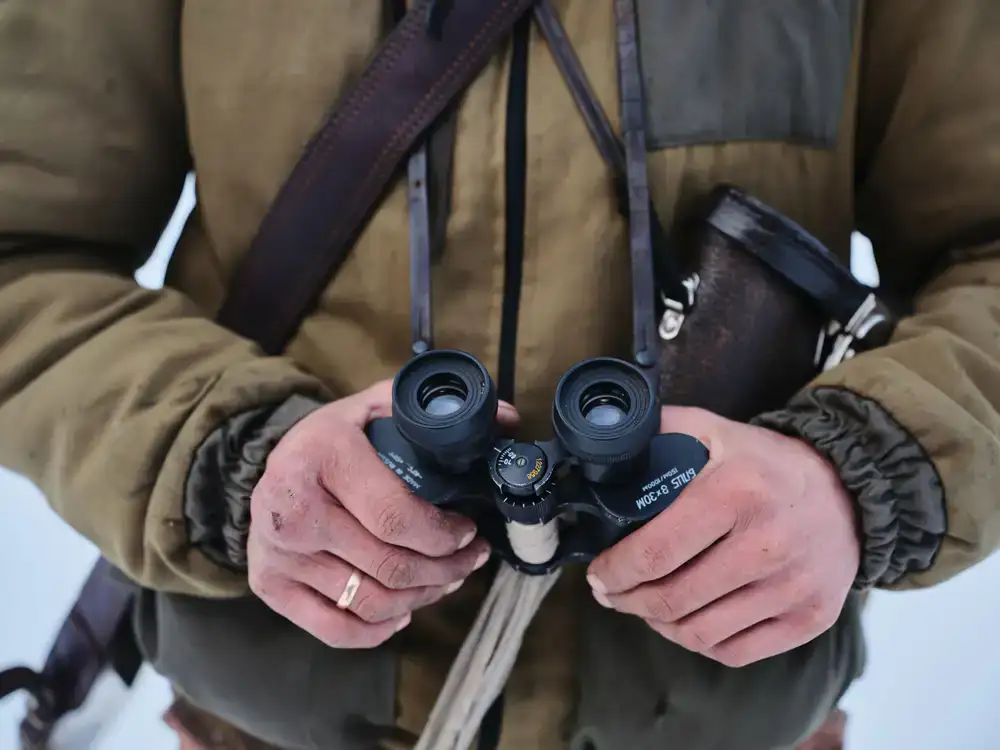
Close up of a naturalist holding binoculars in a misty wetland
Precision for the Field

See Every Detail

Equip yourself with premium binoculars and spotting scopes curated for clarity, durability, and the demands of serious observation.

Explore Equipment
Expert Advice

How to Choose Your Optics

1

Consider Magnification

For general observation, 8x magnification provides a steady image and a generous field of view. Choose 10x if you primarily observe distant waterfowl or raptors across open reserves, provided you can hold them steady. Higher magnifications often narrow your field of view and amplify hand shake.

2

Balance Size and Brightness

The second number in a binocular's specification (e.g., the 42 in 8x42) is the objective lens diameter. Larger lenses gather more light, essential for early morning and late evening tracking. However, they also add weight. A 32mm lens is excellent for daytime travel, while 42mm is the gold standard for all-around use.

3

Test the Ergonomics

Optics are a tactile tool. Pay attention to the focus wheel's smoothness, the chassis weight, and how they sit in your hands. If you wear glasses, check the eye relief—aim for at least 15mm to ensure you can see the full field of view without removing your spectacles.

Technical Reference

Understanding the Glossary

  • Field of View (FOV) The width of the area visible through your optics at a specific distance (usually measured at 1,000 meters). A wider FOV makes it significantly easier to locate small, fast-moving subjects in dense branches.
  • ED Glass Extra-low Dispersion glass. This specialized material minimizes chromatic aberration (color fringing) around high-contrast subjects, delivering sharper and more color-accurate images.
  • Eye Relief The optimal distance from the eyepiece lens to your eye. Crucial for spectacle wearers; long eye relief allows you to see the entire image without removing your glasses.
  • Close Focus The nearest distance at which the optics can render a sharp image. Valuable for observing insects, butterflies, or subjects immediately adjacent to observation hides.

Expert Optics Support

Visit our physical showroom to test our equipment in the field before making a decision. Our naturalists are available to guide your selection.